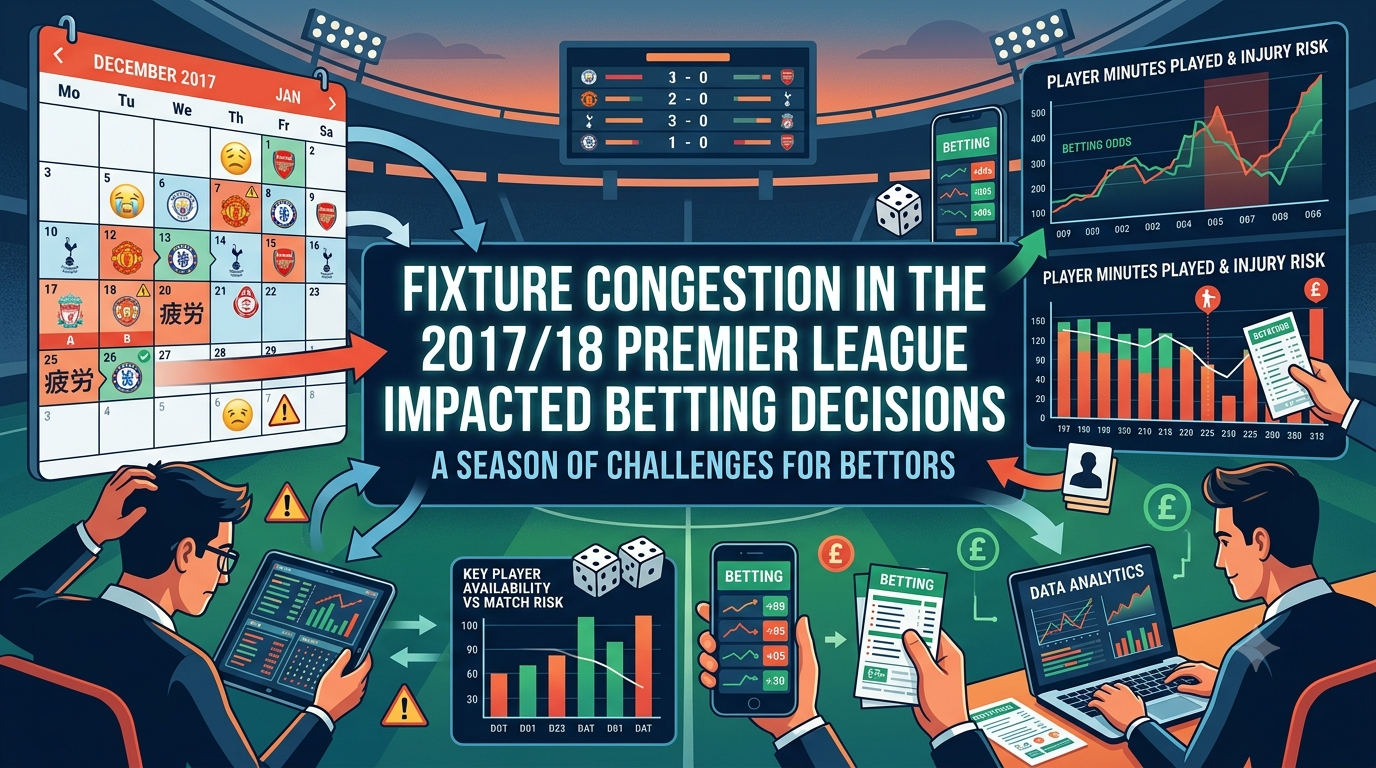
A crowded match schedule changes more than just team rotation. During the 2017/18 Premier League season, periods of fixture congestion created measurable shifts in performance, consistency, and betting value. For bettors, understanding how these scheduling pressures influence outcomes allows for more accurate predictions than relying on form alone.
Why Fixture Congestion Alters Team Performance
When matches are played within short intervals, recovery time becomes limited. This affects both physical output and decision-making speed on the pitch.
The result is a decline in execution. Teams may still follow the same tactical plan, but reduced intensity leads to weaker pressing, slower transitions, and increased defensive errors. These changes directly impact match outcomes and scoring patterns.
Which Teams Handled Congestion Better
Not all teams responded equally to congested schedules. Squad depth and tactical flexibility played a critical role in maintaining performance.
Teams with larger squads could rotate players without significantly weakening their structure. In contrast, teams relying on a consistent starting lineup often showed noticeable drops in quality during busy periods.
How Rotation Influences Match Predictability
Rotation introduces uncertainty because it alters team chemistry and tactical execution. Even when individual players are capable, changes in lineup disrupt established patterns.
To understand how rotation affects betting decisions, consider the following factors:
- Changes in attacking coordination, reducing chance quality despite similar possession levels.
- Defensive miscommunication, increasing the likelihood of errors.
- Reduced familiarity between players, affecting passing accuracy and positioning.
- Variations in tempo depending on which players are rested or rotated.
These disruptions create matches that are harder to predict using standard form analysis.
Fatigue and Its Tactical Consequences
Fatigue does not always reduce effort, but it changes how effort is applied. Teams become more reactive and less capable of sustaining high-intensity strategies.
Decline in Pressing Efficiency
Pressing systems rely on synchronized movement and energy. When fatigue sets in, pressing becomes less coordinated, allowing opponents more time and space.
This shift alters match dynamics. Teams that typically control games may lose that control, increasing unpredictability and often leading to more open or uneven matches.
Identifying High-Risk Matches During Busy Periods
Certain situations consistently produce unreliable outcomes due to scheduling pressure.
A structured way to identify these matches includes:
- Teams playing their third match within a short timeframe, indicating cumulative fatigue.
- Clubs involved in multiple competitions, increasing rotation likelihood.
- Matches where key players show signs of reduced minutes or late substitutions in previous games.
- Situations where travel adds additional physical strain.
These conditions increase variance, making outcomes less stable and harder to model.
Market Behavior During Congestion Periods
Markets often rely heavily on recent results, which may not reflect underlying fatigue or rotation effects. This creates temporary inefficiencies.
A noticeable pattern emerges when observing odds through a digital betting platform like ufabet เว็บหลัก. Teams in strong form may still receive favorable pricing even when facing clear fatigue risks. This delay in adjustment creates opportunities to challenge market assumptions before they correct.
Comparing Performance With and Without Congestion
The impact of fixture congestion becomes clearer when comparing team behavior across different scheduling conditions.
Condition | Performance Stability | Tactical Consistency | Betting Reliability
Normal schedule | High | Stable | Predictable
Moderate congestion | Medium | Slight variation | Selective
Heavy congestion | Low | Disrupted | Unstable
This comparison shows that as congestion increases, predictability decreases, requiring more cautious betting strategies.
Adjusting Betting Strategy Based on Schedule
Recognizing scheduling impact allows bettors to adapt rather than rely on static analysis.
A practical adjustment strategy includes:
- Reducing stake size during heavily congested periods to manage increased variance.
- Avoiding teams with limited squad depth when facing tight schedules.
- Focusing on markets less affected by rotation, such as broader goal trends rather than precise outcomes.
- Monitoring lineup announcements more closely than usual.
These adjustments help maintain consistency despite changing conditions.
Expanding Insights Across Betting Options
Fixture congestion affects different betting markets in different ways. Understanding these differences increases flexibility.
Within a casino online environment that offers multiple betting formats, bettors can apply scheduling insights to various options. For example, fatigued teams may concede late goals, creating value in second-half markets or live betting scenarios. This approach broadens the application of congestion analysis.
When Fixture Congestion Has Less Impact
Not every congested period leads to performance decline. Teams with strong rotation policies and adaptable tactics can maintain stability.
However, these cases are exceptions rather than the rule. Assuming resilience without evidence can lead to overconfidence and poor decisions.
Summary
The 2017/18 Premier League season demonstrated that fixture congestion significantly influences performance, predictability, and betting outcomes. Fatigue, rotation, and reduced tactical execution create conditions where traditional form analysis becomes less reliable. By identifying these periods and adjusting strategy accordingly, bettors can navigate increased uncertainty with greater control and awareness.